Table of Content, LO5
- Future goals
- Portfolio - A personal Challenge
- Osfast Branding project
- Belco UX/UI Project
- The Art Department
- Career day


Future goals
Who?
My name is Matthew Garcia Taborda, born in 2005. I am 19 years old. Coming from Sint Maarten, I would develop 3D skills, having a very basic understanding of Blender and a bigger understanding of HTML coding due to high school.
what's my goal?
I set out on a journey to discover and achieve a goal that I’ve had — to learn game development/design and understand the full process of game making. I’ve always had a knack for games and what they can achieve. As of recently, I’ve fallen in love with the story and development of Cyberpunk 2077 by CD Projekt Red and would love to be closer to the point where I could make a mod for the game or even join CDPR’s development team.
I also really look up to indie developers — especially the ones behind roguelikes and roguelites like Risk of Rain 2 and Dead Cells, or those who get published by Devolver Digital. They make the kinds of games that stick with you, and I’d love to be in that space one day.
my plan to reach it?
To reach my goal, I need to develop my skills and understand the steps to take when creating a game both as a team and solo. I still have a long journey ahead, but I believe this semester pushed me to finally start that journey earlier than expected.
Why does that matter?
I want to make my younger self happy. It’s been an interest for as long as I can remember. Animator, ICT, or anything with computers were my choices before — but they all had something in common: they were useful for making games. And I know I base my actions on emotion. If I find something boring, I’ll struggle with it. But if I enjoy it? I won’t want to stop.
Portfolio - A personal Challenge
What happened?
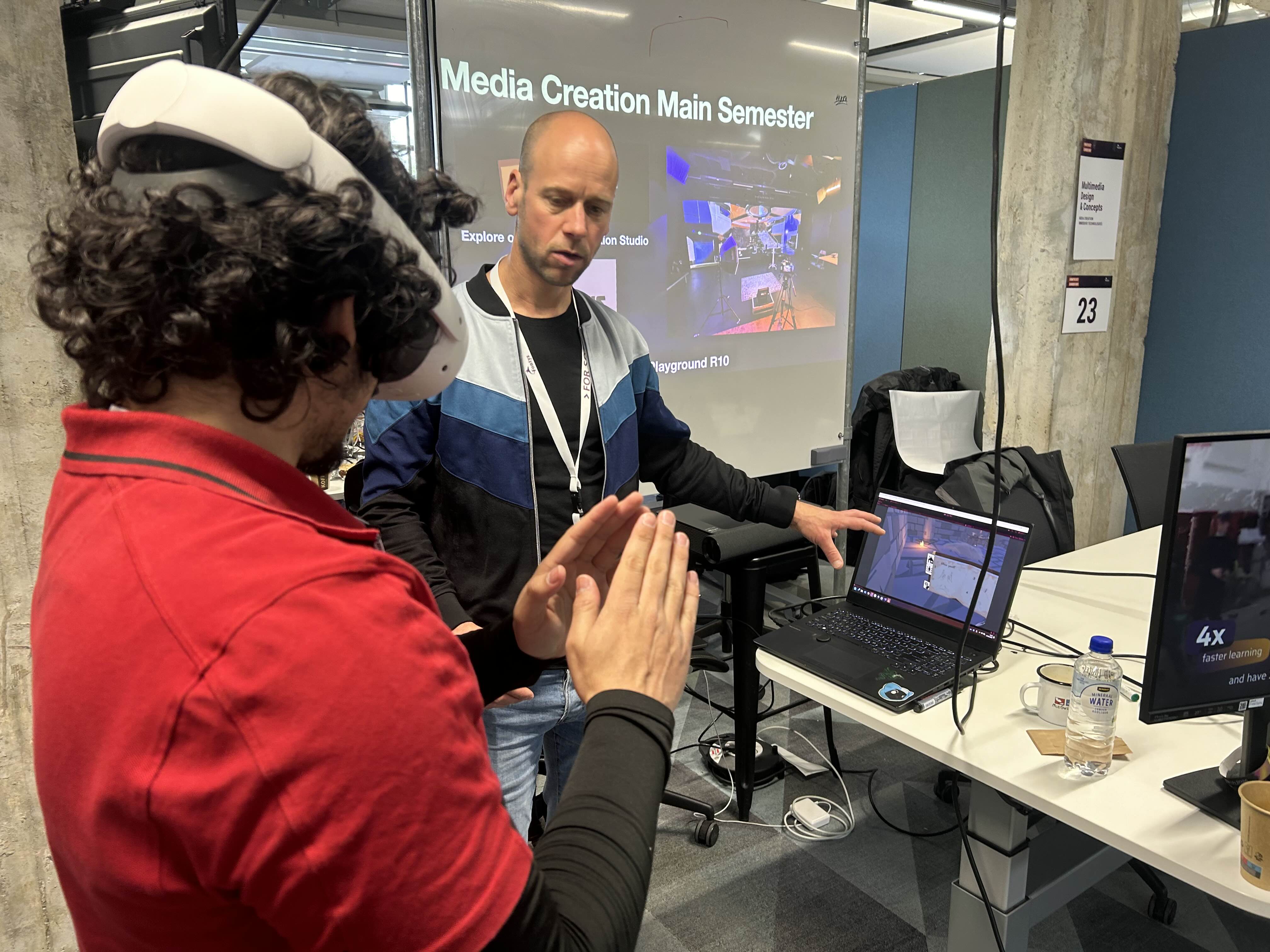
At first, my goal was to create a portfolio game — a playable experience that would showcase all my Learning Outcomes through exploration and interaction. I started building it in Godot, but due to poor planning and a lack of proper concepting, the game quickly became too overwhelming to finish on time. Realizing that, I shifted my focus to a website portfolio instead, applying what I had learned throughout the semester.
The new website kept the theme I wanted — a library with interactable books — but was simpler and more manageable. I implemented scroll-based book page flipping, CSS video backgrounds, a consistent visual theme, and JavaScript-powered interactions to enhance the experience. I asked for feedback from teachers and iterated on things like spacing, layout, and Learning Outcome content presentation.
why does it matter?
This project marked a step forward in how I manage my work and evaluate design choices. It taught me how to balance creativity with structure—an essential skill for future projects and team collaboration.
Reflection
Through this project, I learned how crucial early feedback is—especially when working solo. You miss things until someone points them out. Feedback from teachers and students helped me fix layout, spacing, and how content should be structured for clarity. I didn’t apply things blindly, but took time to understand why certain changes mattered. I also learned that prototyping and planning saves time later. Trying something new doesn’t mean it’ll be quick—it often takes longer. This project showed me how to stay practical while still experimenting with ideas.
Osfast Branding project
what happened?
Our group worked on branding and visual identity for Osfast-IT. I was involved in designing elements and organizing the visual direction of our materials based on user interviews and brand personality. We focused on balancing professionalism with approachability.
why does it matter?
This was one of the first group projects where the visual design really felt cohesive and thought-out. It gave me confidence in collaborative branding and the importance of planning before executing. The way we tied user research into design decisions helped me see how branding isn’t just about style—it’s about purpose.
reflection
I learned the value of establishing a brand identity through consistent design and tone. We made sure our logo, layout, and color palette aligned with the target audience’s expectations. Group communication was key—each of us brought different strengths, and that variety helped polish the final product. I also got a better sense of how to pull valuable insights from interview data and apply that to visual and written elements.
Belco UX/UI Project
what happened?
During the Belco UX project, I helped design and iterate pages based on feedback and internal team reviews. I created the About and Programs pages, reworking them after critique to better fit the tone and structure we wanted. I also joined group sessions to share progress and validate ideas.
why does it matter?
The iterative process gave me a framework I’ll reuse in future group projects: prototype early, test fast, revise often. It also reminded me that team communication directly influences the quality of the final product.
reflection
I learned that group dynamics improve when feedback is part of the culture. It was easy to miss scaling issues or layout inconsistencies, but regular check-ins made it manageable. I also started seeing patterns—certain design choices came up again and again, and we learned to adapt our styles to fit the overall direction. I also noticed how early research impacted visual structure and user flow. As well as the importance of communication within a group, establishing communication early on will provide more trust and better work ethic.
The Art Department
what happened?
I would wake up late and miss a bit of the planning before entering where I attended three talks: two focused on the artists’ personal struggles breaking into animation, and one from a concept artist for Star Wars. I also played a student-made arcade cabinet game centered around collecting crates for a high score.

why does it matter?
This day gave me both creative insight and presentation awareness. It reinforced that the best games don’t need to be flashy — they just need good player feedback and engagement. And it showed how delivery can make or break how your work is received.
reflection
I learned that game design doesn’t have to be complicated to be effective—simple mechanics paired with competition or cooperation can carry a full experience. That arcade game reminded me to step back from complexity and refocus on what makes gameplay satisfying. The concept artist's talk made me realize how much of an artist’s work can be scrapped during production, even full creature and world designs. It’s a reminder that ideation is valuable, even if unused.
On the presentation side, the event itself lacked energy, which ironically taught me how not to present. I saw firsthand how enthusiasm, visual interaction, and audience engagement make a big difference. Monotone delivery and static slides lose people fast. That’s something I’ll apply next time I present — bring energy, visuals, or even a gag to keep people hooked.
Career Day
What happened?
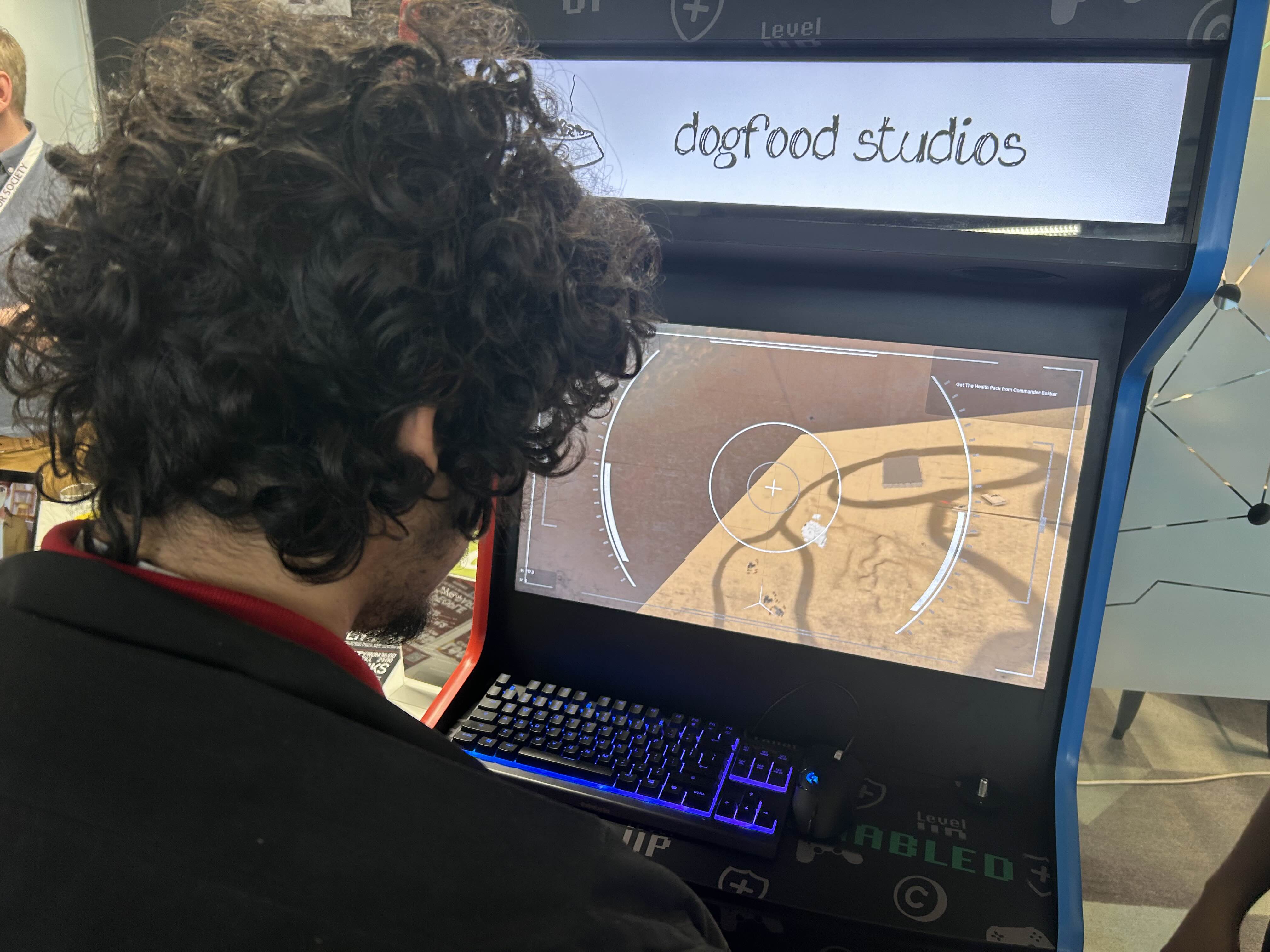
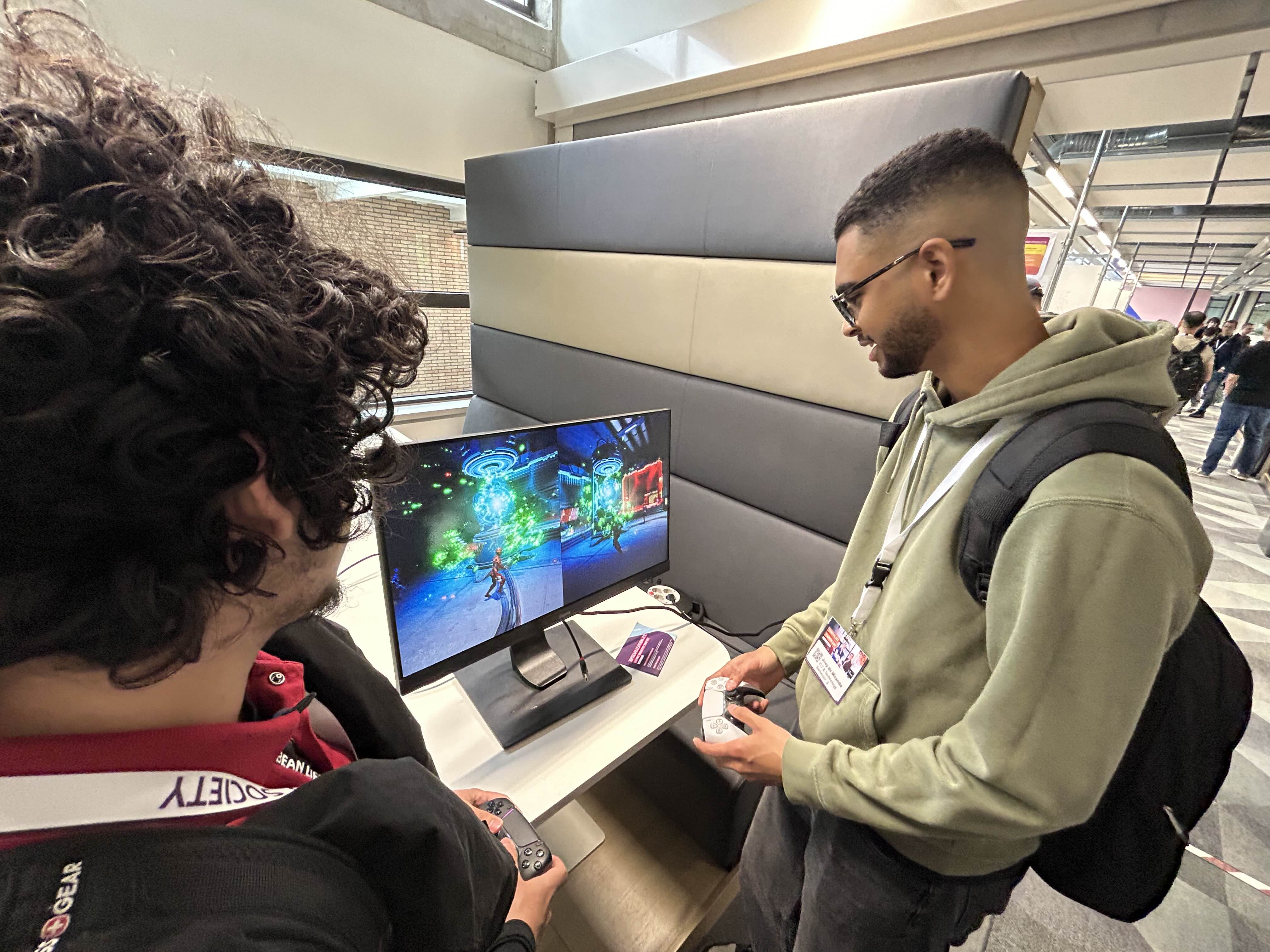
This was the second special event we were invited to. I showed up early this time, went with friends, and explored the different semester booths set up at the TQ building in Strijp-S. We also passed by a LinkedIn photo booth, which was a nice bonus.
Why does it matter?
This event helped me understand the paths I could take for my future. It also reminded me that preparation and initiative matter, even at small events, I could've visited more places especially in specializing the job searching but I did not have a CV on hand.
reflection
Career Day gave me a more practical sense of direction. Instead of just hearing about options from others, I was able to speak directly to people involved in the Game Design, Media Creation, and Immersive Experiences semesters. Each one gave me something different to think about and opened a new path I would never would’ve thought of (immersive experiences).
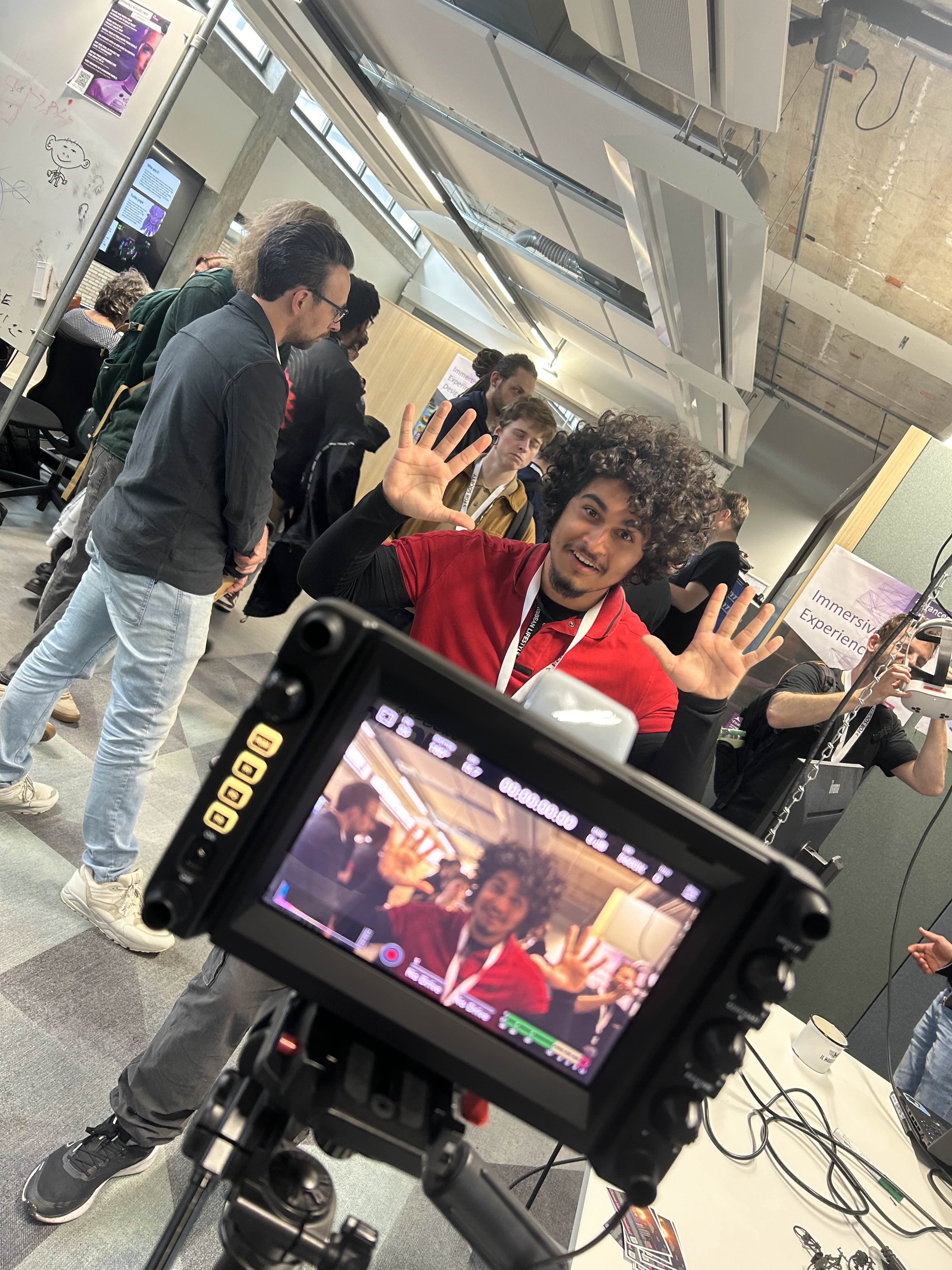
For Game Design, I finally understood how the semester is structured — what kinds of projects are expected and how teams work. Media Creation helped me realize how important Media Creation can contribute to the support and success of other semesters, which is something I hadn’t really thought about before. But the one that stood out the most was Immersive Experiences, which opened up a more technical and experimental path I hadn’t considered. I also realized that I missed out on opportunities like the CV check-in and internship guidance because I didn’t bring a CV. It made me reflect on how I approach events like this — I can’t just “show up” and expect to get the most out of them. Planning ahead matters.